Research
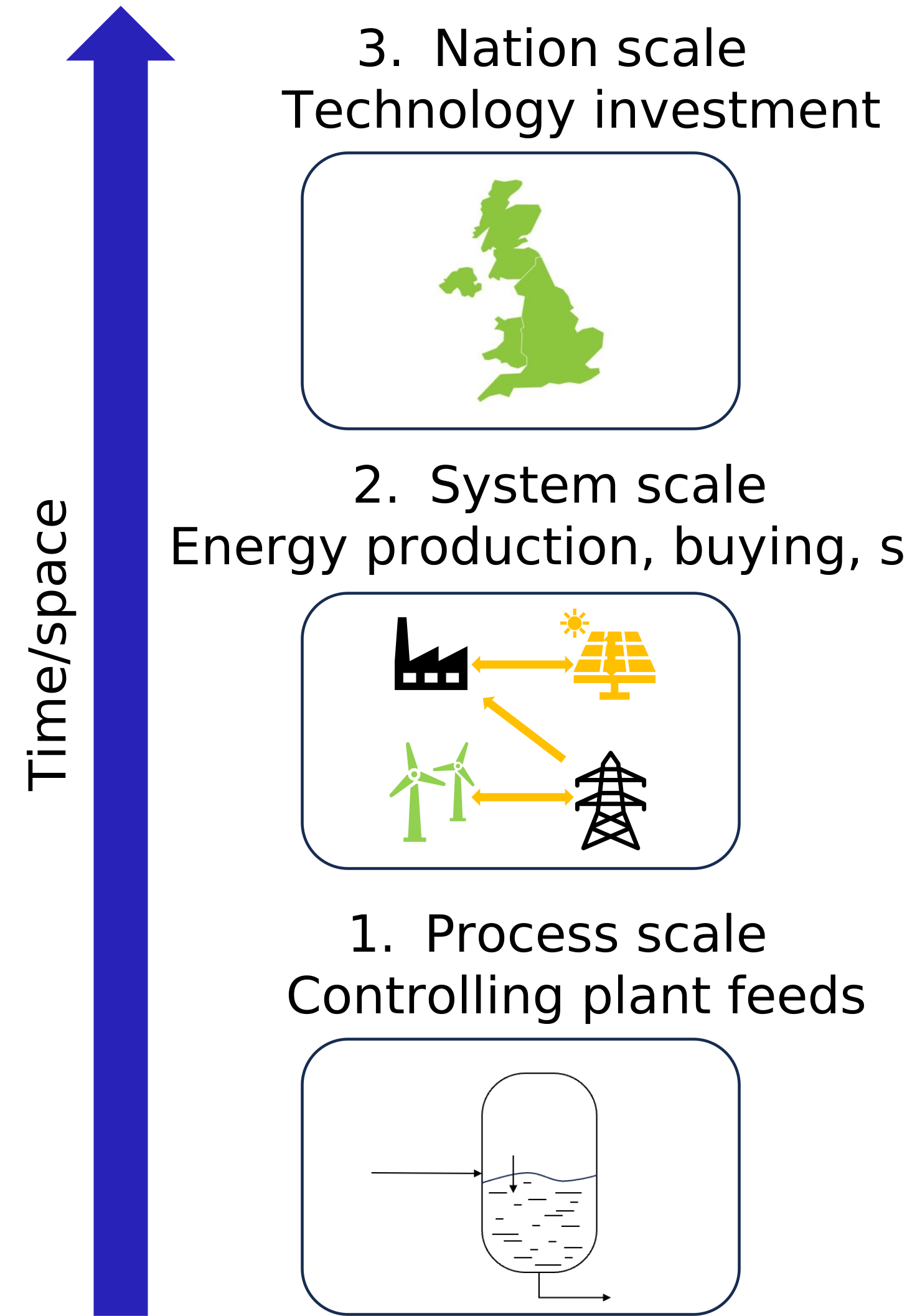
Fig.1. Our research spans multiple scales of sustainable process systems, from real-time process operation to system-wide scheduling and long-term investment planning.
Our group seeks to employ interpretable ML to answer some of the most pressing questions in sustainability. To achieve this, we decompose the sustainable supply chain by scale (Fig.1).
Process Scale: Hybrid Real-Time Optimization
Given a partial understanding of the mathematical models that govern new sustainable chemical processes, can their underlying phenomena be learned from data to determine optimal operating policies? We take a real-time approach to solve this problem, where plant inputs are optimized using learned models that adapt as the plant evolves dynamically. Related works:
System Scale: End-to-End Demand Response Scheduling
What non-market factors can be used to predict the markets involved in sustainable chemical and energy systems? Can these predictions be efficiently embedded into system models to achieve optimal performance while satisfying consumer demand? We use neural networks to learn market distributions and embed these into optimal system scheduling problems. Related works:
Nation scale: Learned Heuristics for Investment Planning
What are the key decisions that influence the uptake of new sustainable chemical projects over time? Can we take a data-driven approach to isolate these factors? We aim to learn heuristic rules to produce interpretable policies that inform future technology investment.